
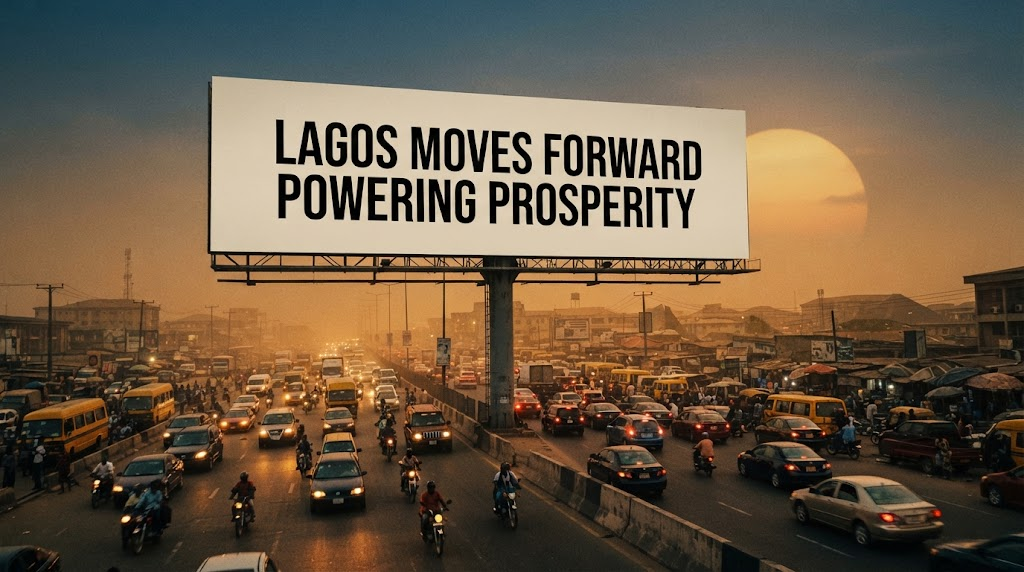
It’s easy to write off billboards in a country moving fast toward mobile-first marketing, but outdoor advertising still holds real weight in Nigeria — especially in high-traffic corridors in Lagos, Abuja, and Port Harcourt where commute times are long and attention is, unusually, uninterrupted.
Six words or fewer, always. A driver or a passenger in traffic has seconds, not minutes. If the headline needs a second look to understand, it’s already failed. The best outdoor ads read like a punchline, not a paragraph.
Design for the worst viewing conditions, not the best. Harmattan dust, glare, faded lighting, distance from the road — assume all of it. High-contrast colour choices and oversized type aren’t a style preference outdoors; they’re the difference between being read and being ignored.
One visual idea, not a layout of features. A billboard trying to communicate a product’s five benefits communicates none of them. Pick the single most persuasive idea and build the entire board around it.
Give outdoor a digital next step. A billboard alone can’t close a sale, but it can plant the brand name so that a later Instagram ad or Google search feels familiar rather than new. The strongest outdoor campaigns are paired with a retargeting or search strategy that catches people once they’re back on their phones.
Location is targeting. Where the board sits matters as much as what’s on it — a board near a bank should speak differently than one near a market. Treat location choice with the same care as audience targeting on Meta Ads.
Outdoor isn’t outdated in Nigeria; it’s underused strategically. Brands that treat it as a standalone awareness play, disconnected from the rest of the funnel, are the ones leaving it behind — not the format itself.