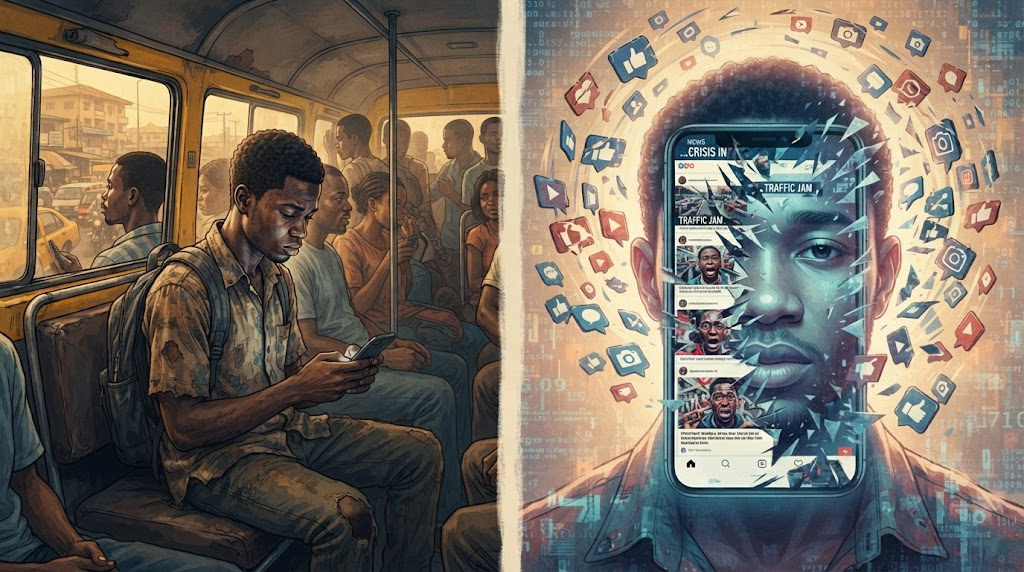
Nigerian audiences today are harder to reach and easier to lose than they were even three years ago. Data costs, platform-switching habits, and a genuinely crowded content environment mean attention behaves differently than the old media playbooks assume.
Attention has fragmented across platforms by mood, not just demographic. The same young professional might be on LinkedIn in the morning for work content, TikTok at lunch for entertainment, and WhatsApp in the evening for close-circle conversation. A brand’s tone needs to shift with the platform’s mood, not stay identical everywhere.
Data cost still shapes behaviour. Many Nigerians are deliberate about what they spend data on, which means unskippable, low-value content gets punished harder here than in markets with unlimited broadband. Content that respects the viewer’s data — fast-loading, quickly rewarding, not bloated — earns more goodwill.
Trust has shifted toward people, not institutions. Audiences increasingly weigh what a relatable creator or a peer says over a brand’s own polished messaging. This is part of why influencer and UGC-style content consistently outperforms traditional ad formats for many Nigerian brands right now.
The window to earn attention has shrunk, but the ceiling for loyalty hasn’t. A brand might get one or two seconds to earn a scroll-stop, but a brand that consistently delivers value once it has that attention can build unusually strong loyalty — Nigerian audiences are vocal and generous advocates for brands that treat them well.
Short-form video has become the default entry point, but it’s increasingly a discovery layer rather than a conversion layer — the sale or sign-up usually still needs to happen somewhere else, which is why pairing short-form content with a clear next step matters more than ever.
The brands adapting fastest aren’t the ones with the biggest budgets — they’re the ones paying closest attention to how their specific audience actually behaves, platform by platform, week by week.